
Quick Start
Account Type
Tools & Resources
Tools
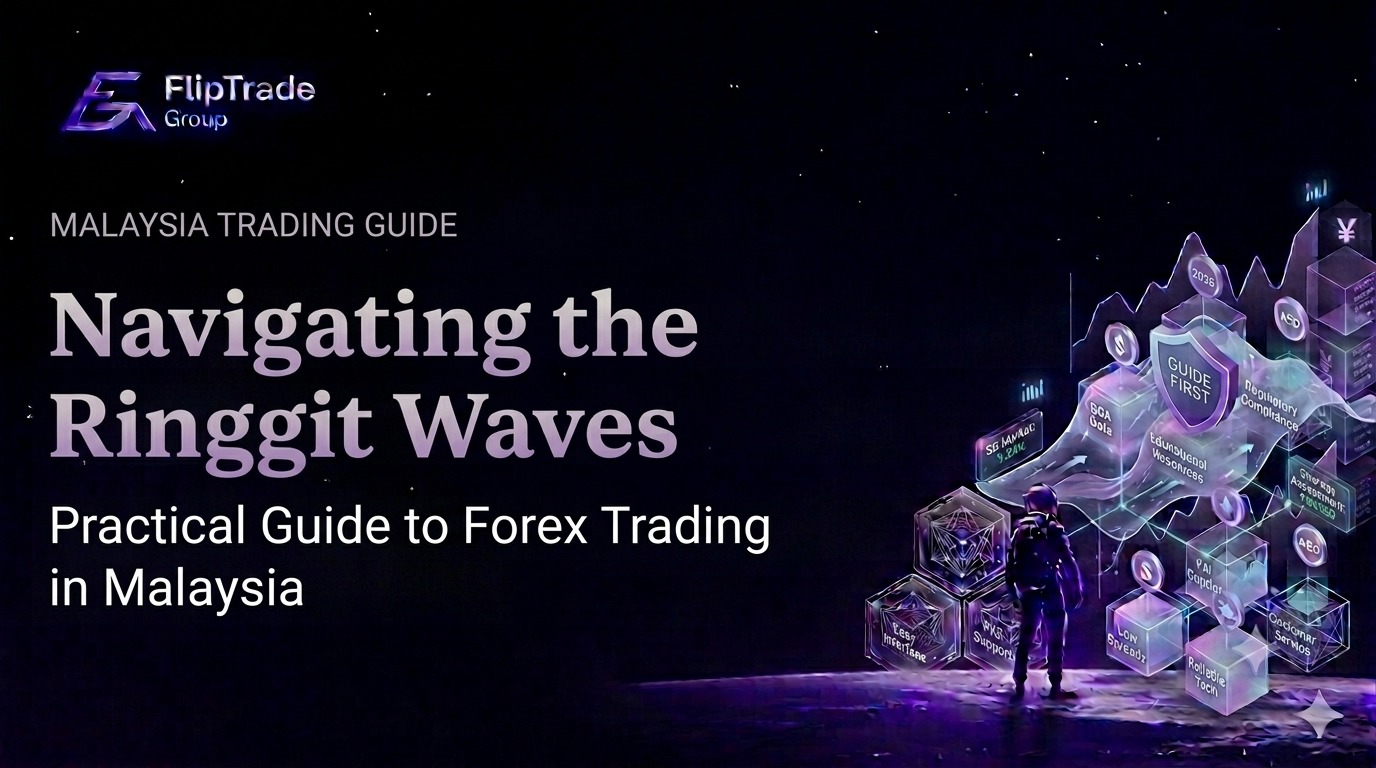
Trading global currencies right from Kuala Lumpur, Penang, or Johor Bahru has blown up in popularity lately. Everyday Malaysians are downloading charting apps, opening accounts, and jumping headfirst into global markets. But let us get one thing straight from the very start. The foreign exchange market isn't a magical money machine. If you enter without a real strategy and proper risk rules, the market will drain your capital before you even realize what happened.
Mastering forex trading in Malaysia takes more than just guessing where price will head next. You need a solid grasp of local operating hours, safety regulations, broker fees, and the emotional discipline required to stay alive in this game.
The FX market runs 24 hours a day, five days a week. Luckily for anyone living in Malaysia, our local time zone puts us in a sweet spot. When you wake up and grab morning coffee, Asian financial hubs like Tokyo, Singapore, and Hong Kong are already active. By mid-afternoon, European markets open up, followed shortly by the massive New York session in the evening.
These session overlaps bring heavy trading volume. While the Malaysian Ringgit (MYR) is tied tightly to local institutional policy, retail traders generally stick to high-volume global currency pairs like EUR/USD, GBP/USD, USD/JPY, and AUD/USD.
Why major pairs? Simple. Higher liquidity means lower trading costs, tighter spreads, and zero issues entering or exiting orders when markets start moving fast.
Before you even think about placing a trade, you have to ask one crucial question: where is your deposit actually going? Security of funds should always come before chasing trading profits.
In Malaysia, financial activities are governed by official oversight bodies like Bank Negara Malaysia (BNM) and the Securities Commission Malaysia (SCM). These entities set up regulatory frameworks to maintain system stability and prevent fraudulent financial schemes from targeting the public.
When evaluating international brokers, make sure they hold licenses from recognized global regulators. Legitimate brokers always keep client money separated from their own operational funds in top-tier banks. Checking established, well-regulated options among the best forex brokers in Malaysia gives you confidence that your capital is handled safely under real compliance standards.
Your broker is your connection to the live interbank market. If their software freezes during major news events or hides random fees in your account statement, your odds of winning drop significantly.
Here is what you actually need to look for when choosing a broker:
True Trading Costs: Don't just look at advertised spreads. Check if there are hidden withdrawal fees, overnight financing charges, or commission markups.
Order Execution Speed: Slippage can wreck a good trading setup. You want an infrastructure that fills market orders instantly without constant re-quotes.
Local Bank Integration: Having straightforward deposit and withdrawal options via local Malaysian online banking saves huge amounts of time and foreign transfer fees.
Islamic Swap-Free Accounts: For Muslim traders, swap-free accounts that align with Shariah principles are essential for overnight position holding.
Responsive Customer Support: When an order gets stuck or a deposit stalls, you need a helpful support team ready on live chat right away.
Testing platforms via a free demo setup is the smartest way to spot the best platform for forex trading in Malaysia before putting real Ringgit on the line.
Currencies don't shift direction on a whim. They react to real-world economic data, interest rate shifts, and global news events. If you want to spot trade opportunities early, keep an eye on these primary market drivers:
Central Bank Rate Decisions: When central banks raise interest rates, their currency usually gains strength as global capital flows in searching for higher yields.
Key Economic Releases: Monthly reports like US Non-Farm Payrolls (NFP), Consumer Price Index (CPI) inflation numbers, and GDP figures trigger immediate short-term volatility.
Global Commodity Movements: Because Malaysia is a key exporter of petroleum and palm oil, sharp swings in global energy and commodity prices frequently ripple back into regional market sentiment.
The single biggest reason beginner traders blow up their accounts isn't bad technical analysis. It is awful risk management. Leverage allows you to control a large lot size with a tiny deposit. But remember this: high leverage magnifies your losses just as quickly as your gains.
Always Use a Stop-Loss: Never execute an order without a clear stop-loss set in advance. Period.
Cap Your Risk at 1% or 2%: Never risk more than a tiny fraction of your account balance on a single trade idea. If you lose three 1% trades in a row, you are down 3%. If you risk 15% per trade, three bad setups wipe out almost half your account.
Calculate Lot Sizes Correctly: Do not guess position sizes. Match your lot size to your stop-loss distance and dollar risk limit.
Keep Leverage Reasonable: High leverage is a trap for disciplined execution. Stick to conservative levels to protect your balance from unexpected market gaps.
To build high-probability setups, combine basic technical chart patterns with macro fundamental awareness.
Technical Analysis: Focuses on studying naked price charts, key support and resistance zones, trendlines, and candlestick patterns. Simple tools like moving averages or RSI can help confirm momentum, but clean price action always tells the clearest story.
Fundamental Analysis: Keep a daily economic calendar open on your phone or laptop. Knowing exactly when major economic announcements drop stops you from getting caught off guard by sudden 60-pip spikes.
Trading is mostly a mental game. Modern trading software like MetaTrader 4, MetaTrader 5, or advanced web interfaces supply all the charts and indicators you could ever need. Industry insight hubs, including platforms like FlipTrade Group, regularly share educational materials to help traders sharpen their market knowledge.
However, no software can control your emotions. Greed makes people over-trade, fear makes them cut winners too early, and frustration leads to "revenge trading" right after a loss.
To stay grounded:
Write down a simple trading plan before the market opens.
Track every trade in a simple spreadsheet or journal.
Review your trades on weekends to catch bad habits early.
Building a sustainable trading career takes time, focus, and serious patience. Treat this like running a real business, not gambling on sports. Pick a solid broker, master one or two chart setups, manage your risk religiously, and keep working on your emotional discipline. Do that consistently, and you will navigate the market with clarity and confidence for years to come.


Flip Trade Group Ltd ( Company No. 232118 ), is incorporated in Mauritius and regulated under License Number: GB26205911.Registered Office:4th Floor, The Docks 4The Docks, CaudanPort Louis, Mauritius
4th Floor, The Docks 4, The Docks, Port Louis, Mauritius
4th Floor, The Docks 4, The Docks, Port Louis, Mauritius
+230 52515560
support@fliptradegroup.com
4th Floor, The Docks 4, The Docks, Port Louis, Mauritius
4th Floor, The Docks 4, The Docks, Port Louis, Mauritius
+230 52515560
support@fliptradegroup.com
Risk statement : An investment in derivatives and financial markets involves high risk and may result in losses greater than your initial investment. Trading in securities, forex, commodities, options, and futures is not suitable for everyone, and you should only invest money you can afford to lose. Before investing, ensure such activities are permitted in your country and seek independent financial, legal, or tax advice. FlipTrade Group Limited does not provide services to residents of the United States, Cuba, Iraq, Myanmar, Russia, North Korea, or Sudan, and its services are not intended for jurisdictions where they would contravene local laws or regulations. Nothing on this site should be considered financial advice.
© FlipTrade Group Limited 2026 | All Rights Reserved
